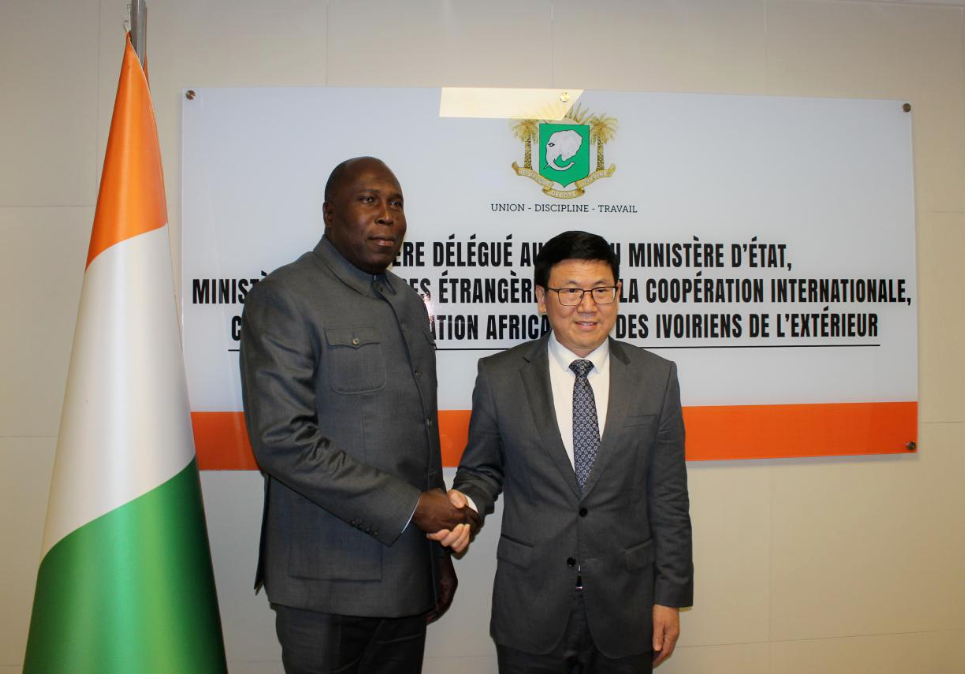
On August 27, CGC signed a cooperation agreement with the Philippine Department of Public Works and Highways (DPWH) for the SP2-CP1 section of the Palimbang–Balabagan Road project.
On August 24, CECEP Wind-power officially commenced construction on its first wind power project in Northeast China—the 200 MW Mulan Wind Farm in Heilongjiang. This pioneering project supports the national strategy for revitalizing Northeast China and marks the company’s market entry into the region.
Recently, McWong Environmental Technology Co., Ltd., a subsidiary of CECEP Guozhen, successfully transformed sludge generated from chemical wastewater treatment from hazardous waste into general solid waste through precise and efficient process upgrades. This breakthrough reduced sludge disposal costs by 80%, saving the client over RMB 10 million annually while cutting McWong’s own annual expenses by RMB 2 million, achieving both environmental and economic benefits.
In March 2025, Merck KGaA and the Pediatric Praziquantel Consortium announced that the first preschool-aged child in Uganda has received treatment with Arpraziquantel (R-PZQ) during an implementation study.
As of the end of March 2025, according to the ESG evaluations released by CSI Primary Industry Public Utilities for 133 listed companies, CECEP Wind-power ranked at Level A.
CECEP is firmly optimistic about the future of China’s economic development and has always maintained a positive outlook on the prospects of the Chinese capital market.
On March 17, the 100 MW wind power project in Aksai County, developed by CECEP Wind-power Gansu Branch, officially obtained government approval, marking a significant advancement in CECEP's strategic deployment of new energy bases within China's Desert, Gobi and Wasteland (DGW) regions.
On March 25, CCTV-13’s Morning News reported on the commencement of CECEP Solar’s 500,000-kilowatt integrated photovoltaic (PV) desert control project in Dalad Banner, Inner Mongolia. A key initiative under China’s Three-North Shelterbelt Forest Program (TSFP), the project adopts a PV + Desert Control model, combining renewable energy generation with the ecological restoration of 51,000 mu (approximately 3,400 hectares) of desertified land.
第  24  /  28  页  总条数: 140
Produced By CMS 网站群内容管理系统 publishdate:2026-01-26 09:23:06